Let me be upfront about something before we get into this.
I’m not a nutritionist. I don’t have a degree in dietetics. I haven’t spent years studying macros and metabolic rates.
What I have done is spend a lot of time figuring out what actually works for a regular 50-year-old guy trying to lose weight without making eating feel like a punishment.
And that’s exactly what this post is — what I actually eat in a day. Not what I think sounds impressive. Not a perfectly optimized meal plan. Just real food, real portions, and real talk about what’s been working for me.
First — Why Eating for Weight Loss After 50 Is Different
Your metabolism slows down as you age. You’ve probably noticed this already — the same eating habits that kept you lean at 30 aren’t cutting it anymore at 50.
A few things change after 50 that affect how you should eat:
Muscle mass decreases. Less muscle means a slower metabolism. The fix? Eat more protein to preserve and build muscle, even while losing fat.
Hormones shift. For men testosterone declines. For women estrogen changes dramatically around menopause. Both affect where your body stores fat and how easily it lets go of it.
Recovery takes longer. Your body needs more nutrients to repair itself after exercise than it did when you were younger.
Calorie needs decrease slightly. You don’t need to starve yourself — but portion awareness matters more than it used to.
The good news is none of this means weight loss is impossible after 50. It just means the approach needs to be smarter.
My Daily Eating Strategy (Not a Diet)
I want to be clear — I don’t follow a specific named diet. No keto, no intermittent fasting, no points system. I’ve tried most of them and what I’ve found is that anything too restrictive eventually fails because real life doesn’t cooperate with rigid rules.
Instead I follow a few simple principles:
High protein at every meal. Protein keeps you full, preserves muscle, and requires more energy to digest than carbs or fat. I aim for 30-40 grams of protein per meal.
Real food most of the time. I’m not perfect and I don’t try to be. But 80% of what I eat comes from actual whole foods — not processed packages with ingredient lists longer than this blog post.
Water before everything. Before every meal I drink a full glass of water. It reduces hunger, improves digestion, and most of us are mildly dehydrated all the time anyway.
Don’t drink your calories. Sodas, fancy coffee drinks, juice — those calories add up fast without making you feel full. I stick to water, black coffee, and occasionally unsweetened tea.
A Real Day of Eating
Here’s what a typical day looks like for me. No fluff, no perfection — just what actually happens.
Breakfast — 7:00am
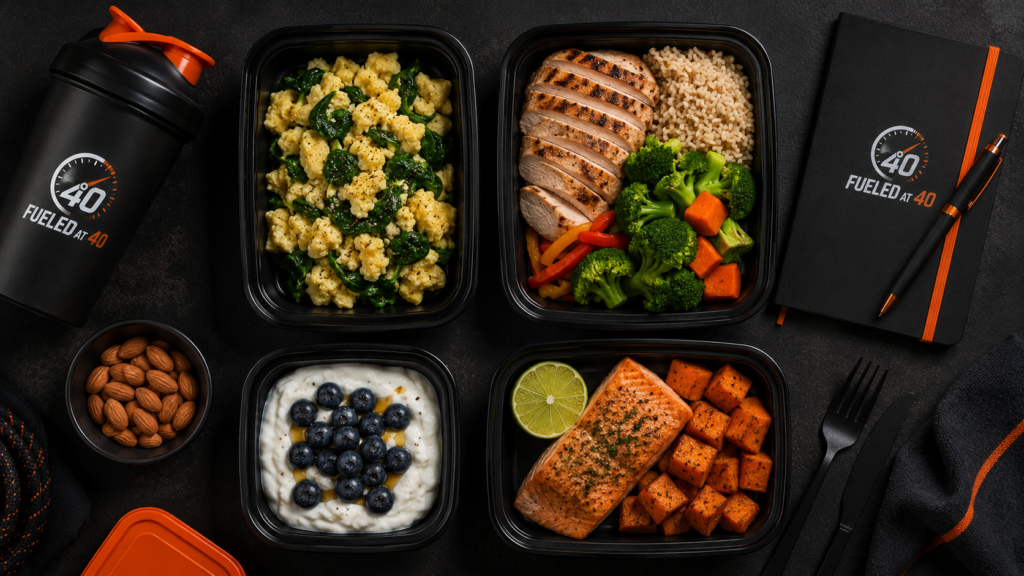
3 scrambled eggs with spinach and a slice of whole grain toast
- Protein: ~22 grams
- Why it works: Quick to make, keeps me full until lunch, doesn’t require any real cooking skill
Sometimes I’ll add half an avocado if I’m hungrier than usual. Sometimes I skip the toast if I had a rest day. I don’t stress about it either way.
Coffee — black or with a small splash of almond milk
I used to load my coffee with cream and sugar. Switching to black or near-black coffee was one of the easiest calorie cuts I made.
Mid-Morning — 10:00am (if needed)
Greek yogurt with a handful of blueberries
- Protein: ~15-17 grams
- Why it works: High protein, low sugar if you choose plain Greek yogurt, satisfying without being heavy
I only eat this if I’m genuinely hungry. If I’m not — I skip it. Learning the difference between actual hunger and boredom eating was a bigger unlock than any diet change I made.
Lunch — 12:30pm
Grilled chicken breast, brown rice, and roasted vegetables
- Protein: ~35 grams
- Why it works: This is my anchor meal — the one I’m most consistent with
I meal prep the chicken and rice on Sundays so lunch during the week takes about 3 minutes. If you’re not meal prepping at least partially you’re making healthy eating harder than it needs to be.
The vegetables rotate depending on what I have — broccoli, bell peppers, zucchini, whatever’s in the fridge. Roast them with olive oil and a little salt and they’re genuinely good.
Afternoon — 3:30pm
A handful of almonds and a piece of fruit
- Protein: ~6 grams
- Why it works: Keeps energy steady heading into the late afternoon
This is when most people reach for something processed and sugary. Having a real snack ready prevents that. I keep almonds in my desk so there’s never a reason to go hunting for junk food.
Dinner — 7:00pm
Salmon or lean ground turkey with sweet potato and a green salad
- Protein: ~35-40 grams
- Why it works: Omega-3s from salmon support recovery and joint health — both important after 40
I keep dinner relatively light compared to lunch. Eating a huge meal late at night when you’re about to sit on the couch and then go to sleep is one of the easiest ways to store fat unnecessarily.
The salad is simple — mixed greens, cherry tomatoes, cucumber, olive oil and lemon juice. Takes 5 minutes and adds volume to the meal without adding many calories.
After Dinner
Herbal tea and that’s it.
This was a big change for me. I used to snack after dinner almost every night — chips, something sweet, whatever was around. Cutting that habit alone made a noticeable difference within a few weeks.
If I’m genuinely hungry after dinner — and sometimes I am — I’ll have a small bowl of cottage cheese. High protein, low calorie, actually filling.
The Numbers (Roughly)
I don’t count calories obsessively but I’m aware of approximately what I’m eating:
- Daily protein: 120-140 grams
- Daily calories: 1,800-2,100 depending on activity level
- Water: At least 80-100 oz
These aren’t magic numbers — they work for my size and activity level. Your needs may be different.
What I Don’t Do
Just as important as what I eat is what I’ve stopped doing:
- I don’t eat fast food more than once a week — and when I do I make smarter choices
- I don’t drink alcohol during the week
- I don’t skip breakfast thinking it’ll help me lose weight faster — it doesn’t, it just makes me overeat later
- I don’t label foods as “bad” — that mindset leads to guilt, which leads to giving up
The Bottom Line
Eating for weight loss after 50 doesn’t require a complicated plan. It requires consistency with a few simple principles — more protein, real food most of the time, fewer liquid calories, and portion awareness.
You don’t have to be perfect. You just have to be consistent more days than not.
Start with one meal. Make breakfast high protein for a week. See how you feel. Build from there.
Small changes done consistently will always beat dramatic overhauls that last two weeks.
Want simple nutrition tips and real talk about eating after 40 delivered to your inbox? Join the FueledAt40 community below.